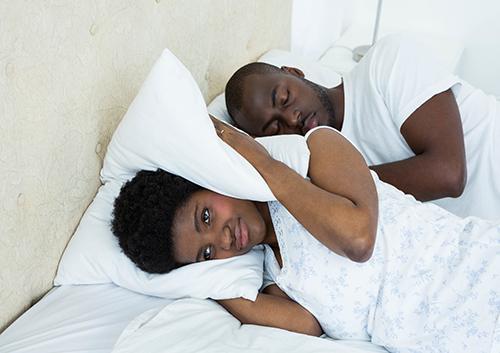
Snoring occurs when the tissues in the throat relax enough to partially block the airway, or when a physical condition such as enlarged tonsils or a deviated septum prevents air from flowing freely. This obstruction causes the surrounding tissue to vibrate, producing that familiar, unpleasant sound. Occasional snoring is common and usually harmless, but loud, constant snoring can be a sign of a condition called obstructive sleep apnea, or OSA.
With OSA, the airway becomes blocked repeatedly during sleep, and breathing actually stops for a few seconds at a time, sometimes longer. The body wakes just enough to resume breathing, pulling you out of the deep sleep your body needs and into a lighter stage of sleep, sometimes dozens of times an hour. Snoring is extremely common among adults, and researchers estimate a large share of the adult population snores at least occasionally, though not everyone who snores has sleep apnea. For a closer look at how this cycle affects your teeth and gums over time, see our post on the effects of sleep apnea on dental health.
What Problems Can Sleep Apnea Cause?
The potential effects of untreated sleep apnea are wide ranging. You could experience daily morning headaches, sore throats, and dry mouth, which can contribute to tooth decay and gum problems over time. You might notice moodiness, low energy, or trouble concentrating during the day. Irritability is a common consequence as well, and any or all of these effects can make getting through each day more difficult.
More seriously, sleep apnea can lead to dangerous situations, including falling asleep unintentionally while working, supervising children, or driving. Sleep apnea has also been associated with high blood pressure, heart disease, and stroke risk. If you are ever prescribed general anesthesia or certain pain medications, be sure your medical team knows you have sleep apnea, since it can change how your body responds to sedation.
Signs You Should Be Evaluated for Sleep Apnea
You should talk with your doctor about an evaluation for sleep apnea if you or someone in your household notices any of the following:
- Snoring loudly enough to disturb your sleep or the sleep of others
- Waking up gasping for air
- Pauses in breathing during sleep noticed by a partner
- Continual drowsiness during the day despite a full night in bed
- Waking up with headaches, a sore throat, or dry mouth on a regular basis
- Noticeable personality or mood changes
Why a Dentist Is Often Part of the Sleep Apnea Conversation
Sleep apnea is diagnosed through a sleep study ordered by a physician or sleep specialist, not by a dentist. Once a diagnosis is confirmed, though, dentists play a meaningful role in treatment for many patients. The American Academy of Sleep Medicine and the American Academy of Dental Sleep Medicine both recognize oral appliance therapy as a treatment option for adults with OSA, particularly for patients who cannot tolerate a CPAP machine or prefer an alternative. A custom-fitted oral appliance works by gently repositioning the jaw to help keep the airway open during sleep.
| Treatment Path | Who It’s Typically For | How It Works |
|---|---|---|
| CPAP Therapy | Moderate to severe OSA | Delivers steady airflow through a mask worn during sleep |
| Oral Appliance Therapy | Patients who cannot tolerate CPAP or prefer an alternative | A custom device gently repositions the jaw to help keep the airway open |
| Lifestyle and Positional Changes | Mild snoring or mild OSA | Weight management, side sleeping, and reducing alcohol before bed |
If you are diagnosed with sleep apnea, talk to the doctor at our Livingston, New Jersey office about whether an oral appliance may fit into your treatment plan alongside your physician’s guidance. Whatever treatment you and your doctors decide on, following through consistently is the part that matters most. Do not let an annoying situation become a dangerous, and potentially life-threatening, one. You can also read more in our related post, Sleep Apnea and Snoring.
Wondering if an oral appliance could help?
Talk with our team about whether this fits your treatment plan.
Frequently Asked Questions About Snoring and Sleep Apnea
Does snoring always mean I have sleep apnea?
No. Many people snore occasionally without having sleep apnea. Signs that point toward a possible apnea diagnosis include gasping awake, breathing pauses noticed by a partner, and daytime drowsiness despite a full night of sleep, and these warrant an evaluation with a physician.
Can a dentist diagnose sleep apnea?
Sleep apnea is diagnosed through a sleep study ordered by a physician or sleep specialist, not by a dentist. Once you have a diagnosis, a dentist can evaluate whether an oral appliance is an appropriate part of your treatment plan.
How does an oral appliance for sleep apnea work?
A custom oral appliance is worn during sleep and gently repositions the lower jaw to help keep the airway open. It is typically recommended for patients who cannot tolerate CPAP therapy or who prefer an alternative approach for mild to moderate cases.
Is an oral appliance as effective as a CPAP machine?
Effectiveness depends on the severity of your sleep apnea and your individual anatomy, which is why a physician’s diagnosis and guidance come first. Your doctor and dentist can work together to determine whether an oral appliance meets your treatment goals.
What happens if sleep apnea goes untreated?
Untreated sleep apnea has been associated with daytime fatigue, mood changes, and increased risk for conditions such as high blood pressure, heart disease, and stroke. It can also affect how your body responds to anesthesia, so it is important to mention it to any medical provider.