Advanced Dentistry.
Personal Care.
Exceptional Results.
Family, Implant, and Cosmetic Dentists Serving West Orange, the Greater Essex County, Montclair, Livingston, New York City, and the Country at Bagoff Dental Arts.
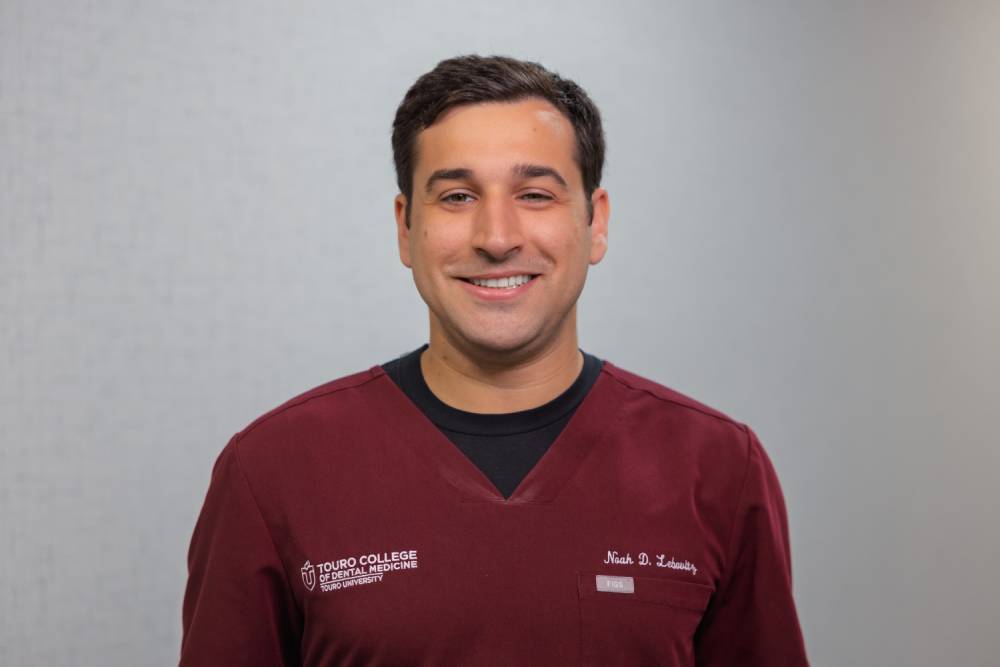
Patients from West Orange, Livingston, and across Essex County come to Bagoff Dental Arts when a gap, a chipped edge, or crowded teeth start to bother them. Dr. Noah Lebovitz and our team handle replacing missing teeth, covering chips and stains, and straightening teeth that overlap. Each is easier to treat early, while the teeth and bone around it are still healthy.
Meet the Dr.
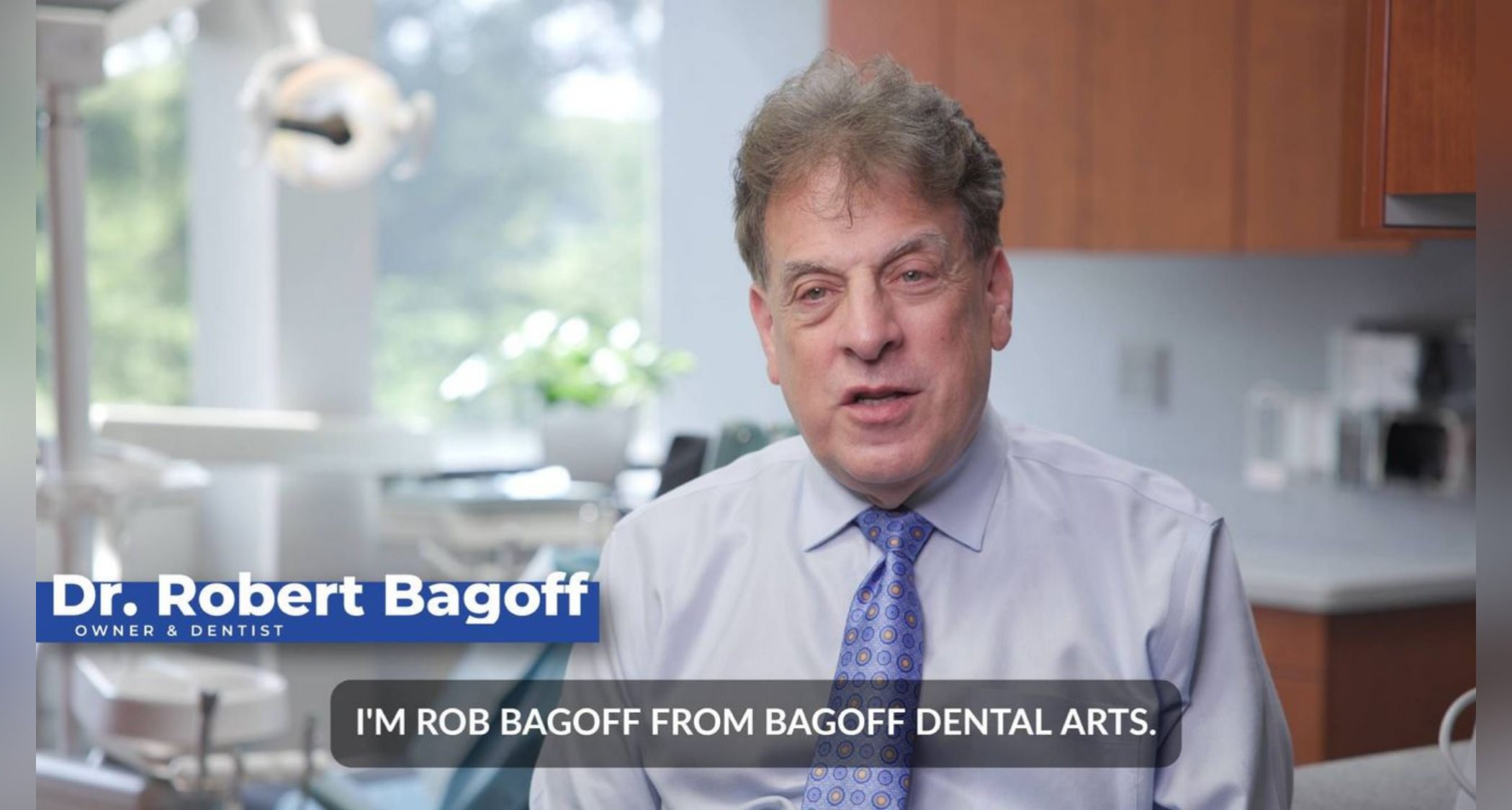
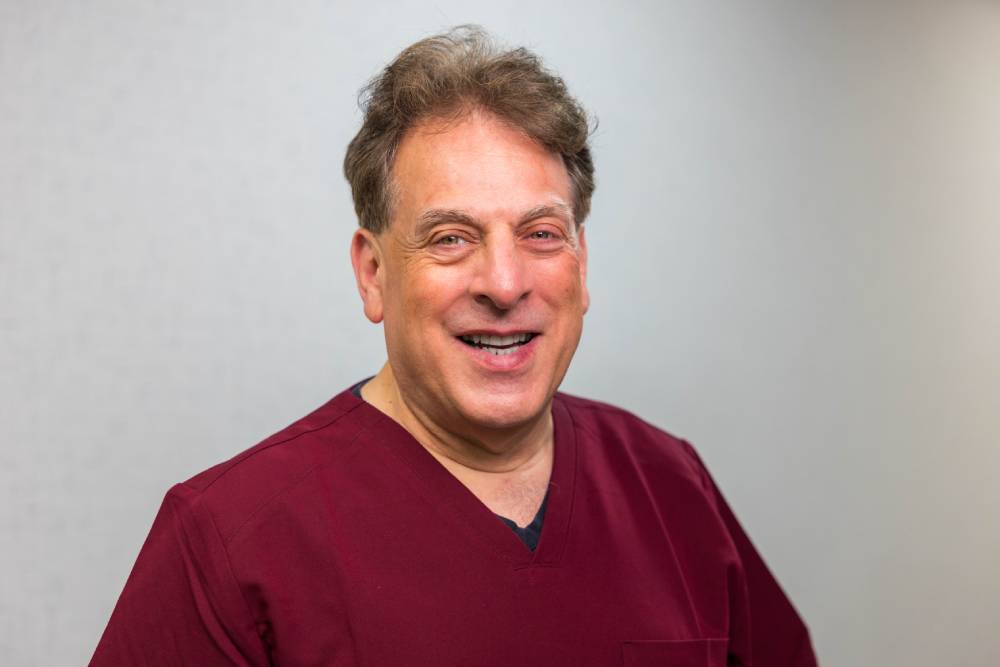
Dr. Noah D. Lebovitz starts every appointment by showing you what he sees and explaining what it means for your health before any options come up. He walks through your X-rays and exam findings in plain terms, answers your questions, and gives you time to think it over. Dr. Lebovitz holds a Doctor of Dental Surgery (DDS) degree. Dr. Robert M. Bagoff founded the practice and has been treating patients for more than 20 years. He also works as an instructor at a dental school, where he trains future dentists in current clinical methods. Everyone on our team keeps up with continuing education and accreditation as a standing part of the job. We also run on time. You won’t sit waiting well past your booked time. If something in your exam is unclear, ask Dr. Lebovitz to pull up the image again and walk you through it a second time.

Dental Implants West Orange NJ
Are Dental Implants right for you?
A missing tooth changes how you chew, how your other teeth lean, and how much bone your jaw keeps.
If you want a replacement with its own root that works like the tooth you lost, implants deserve a close look. Your bone and gums decide how simple that process is.
Who is a candidate for Dental Implants?
You’re a strong candidate for an implant if three things line up:
- Enough jaw bone to anchor the implant post
- Healthy gums with no active infection around the gap
- No health conditions that slow down healing
Smoking doesn’t rule you out, but smokers face a higher rate of implant failure, so tell us if you smoke before we plan anything.
Already lost some bone? A grafting procedure can rebuild the area for an implant. A full imaging evaluation confirms your candidacy before any treatment talk.
What does the Dental Implant process involve?
Planning every implant on screen first shortens your time in the chair.
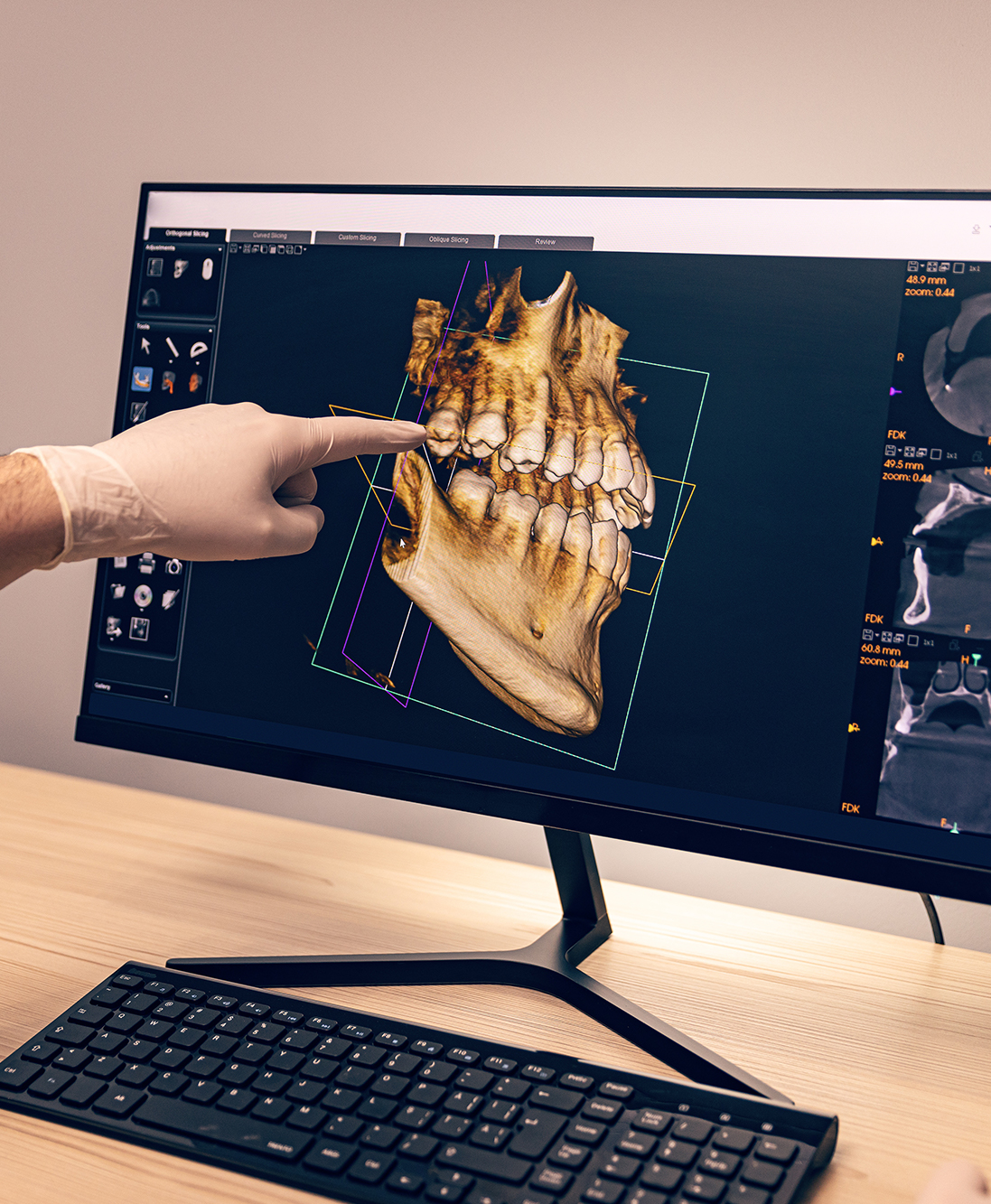
- We scan your jaw with CBCT 3D Cone Beam Imaging, which uses a lower radiation dose than traditional X-rays.
- Dr. Lebovitz reads the 3D scan with you, pointing out your bone depth and where the nerves run.
- We map the implant’s exact angle and depth with the NobelClinician 3D Computer Generated Surgical Implant Guide.
- At your surgery visit, the guide directs placement so the post goes where the plan says.
Where do Dental Implants fit into your treatment plan?
Every step of your implant treatment happens at our West Orange practice. You won’t need to visit a separate surgeon for one phase and return to us for another. Once the post goes in, your jaw needs time to heal before we attach the crown.
If you need a bone graft, that adds a healing stage at the front of the process.
At your first appointment, we lay out the whole sequence. You’ll know what each visit covers, how far apart the visits fall, and when to expect your final crown.
When is the right time to consider Dental Implants?
The simplest time to place an implant is soon after a tooth is lost, while the surrounding bone is still in good shape. Implants in healthy bone can serve you for many years with regular brushing, flossing, and checkups.
If a denture or bridge you wear has started to slip or rub, the bone underneath has likely changed shape, and that’s your signal to ask about implants.
Planning a graft first? The implant goes in once the graft has healed enough to hold it. We confirm that timing with you before booking the surgery visit.
Why Dental Implants over the alternatives?
An implant is the one replacement here that fuses to your jaw and keeps the bone in use. A bridge fills the gap faster, in a few visits with no surgery or healing period.
The catch is that a bridge requires shaving down the two healthy teeth beside the gap. A denture skips that step, but it sits on the gum and does nothing to stop the bone underneath from shrinking. Implants ask more of you up front, since placement is a surgical step.
A BMC Oral Health paper on implant restorations cites earlier research in which the pooled 5-year success rate for implant-supported single crowns was higher at 95% than for bridges anchored to natural teeth.
Waiting Costs You More Than a Tooth
Waiting on a gap costs you bone first. Once a tooth is gone, the jaw in that spot no longer gets pressure from a root. The bone there starts to shrink within months. A systematic review in the International Journal of Dentistry cites research showing that within 12 months of an extraction, a 50% reduction of alveolar ridge width can be observed . The alveolar ridge is the strip of jawbone that holds your teeth.
The teeth on either side begin to tilt into the empty space, which throws off your bite. As they lean in, the gap itself narrows, leaving less room for a future implant crown.
Once enough bone is gone, an implant may no longer be possible without a larger graft first. That adds another procedure, another healing period, and more cost. A treatment that could have taken a few visits stretches across many more.
Dental Veneers Livingston NJ
Are Veneers right for you?
Some smile concerns span several teeth at once: a chipped edge, a dark tooth, a length that looks uneven when you grin. Veneers address how the whole front of your smile looks. They work best on teeth that are healthy underneath, with any gum or decay problems already treated.
Who is a candidate for Veneers?
Veneers suit you if your front teeth bother you in ways that whitening hasn’t fixed, such as:
- Chips along the biting edge
- Teeth that look uneven in length
- Stains that sit deep inside the tooth
- Small gaps up front
Your enamel needs enough thickness for the veneer to bond. If you’ve lost a lot of enamel to wear, we may suggest a different restoration.
Heavy grinding is the other thing to check, since we need to manage it first or the porcelain can crack.
What does the Veneer process involve?
You see your new smile before we touch a tooth.
- Smile Imaging Software lets us show you a projected result on screen.
- Our STA Anesthesia System numbs the area, using a computer to control how the anesthetic flows.
- We remove a thin layer of enamel from the front of each tooth so the veneer sits flush.
- Impressions come next, and you leave with temporary veneers until your permanent set is ready.
- At your second visit, we bond the porcelain and adjust it until your bite feels right.
Where do Veneers fit into your treatment plan?
Plan on two appointments at our practice, with time between them for your permanent set to be ready.
If teeth whitening is part of your plan, we whiten first and then match the porcelain to your brighter shade on bonding day. Porcelain won’t lighten later the way natural enamel does, so this order keeps every tooth the same color. Dr. Lebovitz checks the porcelain shade against your whitened teeth before he bonds anything.
If you’re also planning other cosmetic work, we sequence each step so every result holds up through the next one.
When is the right time to consider Veneers?
Veneers make sense once whitening has done all it can. If your shade improved but the chips, uneven edges, or gaps are still there, the problem is shape, and bleaching can’t change shape. Porcelain veneers can last many years with regular care.
They’re also worth a look when older bonding work has started to chip or turn yellow and the touch-ups keep coming back.
Why Veneers over the alternatives?
Porcelain veneers hold their color and surface finish better than composite bonding, their closest alternative. Bleaching is the simplest place to start, though it only changes natural tooth color and can’t reshape anything.
Composite bonding has real strengths. We can often finish it in one visit, and it usually leaves your enamel untouched, which makes it a good fit for a single chip. Its weakness is the surface.
A two-year randomized trial of patients who had gaps between front teeth closed found surface quality changes were more frequent in the composite veneer material than with ceramic. The cost of porcelain’s durability is the enamel preparation that bonding usually skips.
Unaddressed Enamel Damage Doesn't Stay Cosmetic
Enamel can’t repair itself, and a tooth with wear or a crack keeps losing structure each time you bite down. In a Finnish study of 1,962 adults in their mid-40s, almost half had enough erosive wear, meaning enamel lost to acid, to need care to prevent further progression of the condition.
A chip or crack that looks cosmetic is also a weak spot where decay can start. Once the outer surface breaks, bacteria reach the softer layer underneath more easily. A tooth that needs only a veneer today can need a more involved repair later, with more visits and more cost.
A small crack can also spread deeper over time. Once it reaches the inner tooth, it can cause sharp pain when you chew or a sudden break while you’re eating.
Invisalign Livingston NJ
Is Invisalign right for you?
Ask yourself a simple question: can you floss between every tooth without the thread catching or shredding? Alignment shapes how easily you clean your teeth and how evenly your bite wears. If crowding or spacing makes either one harder, straightening affects your health as much as your appearance.
Who is a candidate for Invisalign?
Strong candidates are adults and older teens who can keep their aligners in nearly all day and night. Missed hours slow the movement your plan depends on.
Aligners also work best for mild to moderate cases of:
- Crowding, where teeth overlap or twist
- Gaps between teeth
- Bite issues that cause uneven contact
Severe jaw misalignment or complex bite problems call for traditional orthodontics or a combined plan. We check your bite and jaw position at your evaluation to see which group you fall into.
What does Invisalign treatment involve?
We plan your whole treatment on screen before you get your first aligner. We start with a digital scan of your teeth, then turn that scan into a stage-by-stage map showing how each tooth moves and when.
You wear each set of aligners for the number of days your plan calls for, then switch to the next set, which picks up where the last one left off.
Progress visits are brief and spaced further apart than traditional orthodontic checkups. There are no wires to adjust.
Where does Invisalign fit into your treatment plan?
We manage your Invisalign treatment at our practice, and every scan, check-in, and retainer fitting happens here. At each check-in, we photograph your teeth with our Intra-Oral Camera, a handheld camera that shows close-up images on a screen. We compare those images to your plan to confirm each tooth is on track. If a tooth lags behind, we adjust the sequence of your remaining aligners.
If you also plan cosmetic work on your front teeth, we schedule it after alignment is finished. A restoration bonded to a tooth that’s still moving may not fit once that tooth reaches its final position.
When is the right time to consider Invisalign?
Two signs suggest it’s time:
- Food packs into the same tight spots after every meal
- Certain teeth show flattened wear spots from taking more than their share of your bite
Either sign points to alignment as the cause. Treatment length depends on how far your teeth need to move, and your scan gives you an estimated timeline before you commit.
Adults of any age can start. Your teeth and gums just need to be healthy first. If a dentist ruled out aligners for you years ago, a fresh scan shows where you stand now.
Why Invisalign over the alternatives?
Aligners come out for meals and brushing, so your cleaning routine barely changes. Fixed braces have their own advantage. They stay on around the clock without relying on you, and they handle complex tooth movements that aligners can’t.
Their downside is hygiene, since brackets and wires trap food and make every brushing take longer. A 2026 systematic review and meta-analysis found that clear aligners significantly improved periodontal outcomes compared to fixed appliances, meaning the gums stayed healthier during treatment.
Aligners are hard to spot in conversation, and their trade-off is discipline: an aligner left in its case moves nothing.
Crowded Teeth Create More Than an Aesthetic Problem
Crowded teeth trap plaque in places a brush and floss can’t fully reach. That raises the risk of decay and gum disease in exactly those spots.
A household survey covering children ages 6 to 12 in suburban Nigeria found greater proportions of participants with crowding had cavities than those without it.
Leaving crowding alone means the same spots keep causing trouble. A filling can fix one cavity, yet the overlap that trapped the plaque stays in place, so you may pay for repairs in that spot again.
An uneven bite adds a second problem. Teeth that absorb extra chewing force wear down faster, and that wear is permanent. Worn edges also chip more easily.
What Sets Us Apart
Our experienced and enthusiastic dental team in West Orange, NJ is thrilled to welcome you to our practice, and we thank you for selecting us as your dental professionals.
On your first visit with us, we will listen carefully to your dental concerns and answer any questions you may have. You can expect a thorough oral examination and diagnosis including a routine dental cleaning, an oral cancer screening, any necessary x-rays, and of course a discussion of the most appropriate treatment to meet your oral health needs and goals.
In advance of your appointment, we ask that you complete our new patient forms, which can be found in the ‘Patient Center’ tab on our website. By completing these forms beforehand, we can be better prepared for your arrival and ensure that we have adequate time to provide the care and attention you need.
We recognize the value of your time, and make it a priority to be on time for you. We happily reserve an hour in the doctor’s schedule exclusively for you.
Thank you for choosing us as your West Orange, NJ dental health professional. We make it our duty to perfect your smile and make it SHINE! If you have any questions, concerns, or requests for additional information, please do not hesitate to call or email us!

Testimonials
FAQs
What should I expect at my first visit?
Your first appointment runs a full hour. We use that time for a complete exam, digital X-rays, and a conversation about what you’ve noticed and what you’d like to change. You’ll have room to ask questions without watching the clock.
New patient forms are available online, so you can fill them out at home and keep your visit focused on the conversation. If anything on the forms is unclear, leave it blank and we’ll go over it together.
If dental visits make you anxious, tell us at check-in so we can explain each step before we start.
Where is the office located in West Orange?
You’ll find our practice at 405 Northfield Ave, Suite 202, in West Orange, NJ 07052.
Call us at 973.325.9000 before your first visit if you have questions about directions, parking, or where to check in. When you call, tell us briefly what’s been bothering you. That helps us book the right type of appointment and set aside enough time.
If you’re in pain or have broken a tooth, say so at the start of the call so we can look for the earliest opening.
Do you see patients from Livingston, Millburn, and Short Hills?
Yes. Patients come to us from Livingston, Millburn, Short Hills, Roseland, and the wider Essex County area. Some travel in from New York City or from out of state for their care.
We see children, teens, and adults, so your whole family can keep one dental practice. For a household managing several schedules, that means one address and one set of records to keep track of.
If you’re traveling in from farther away, ask about our concierge services when you call.
What if I have not been to the dentist in several years?
You’re not alone, and there’s no judgment here. Your first visit focuses on where things stand today. We look at your mouth as it is now, and the length of the gap doesn’t change how we treat you.
We sort what we find by urgency, treat the most pressing problem first, and plan the rest at a pace that fits your schedule.
If the gap ended with a sudden problem, like a cracked tooth or swelling, call us right away. We can sometimes see urgent problems on a Saturday.
How do I know which treatment is right for my situation?
That’s what the exam and consultation are for. Once we’ve finished the exam and heard what’s bothering you, we go through what we found and what each finding means for your teeth.
Every item on a treatment plan comes with its reason, so you’ll know what each step fixes, what happens if you wait, and which items you can schedule later.
Take the plan home if you want time to think. Bring your questions back to us before you schedule anything.